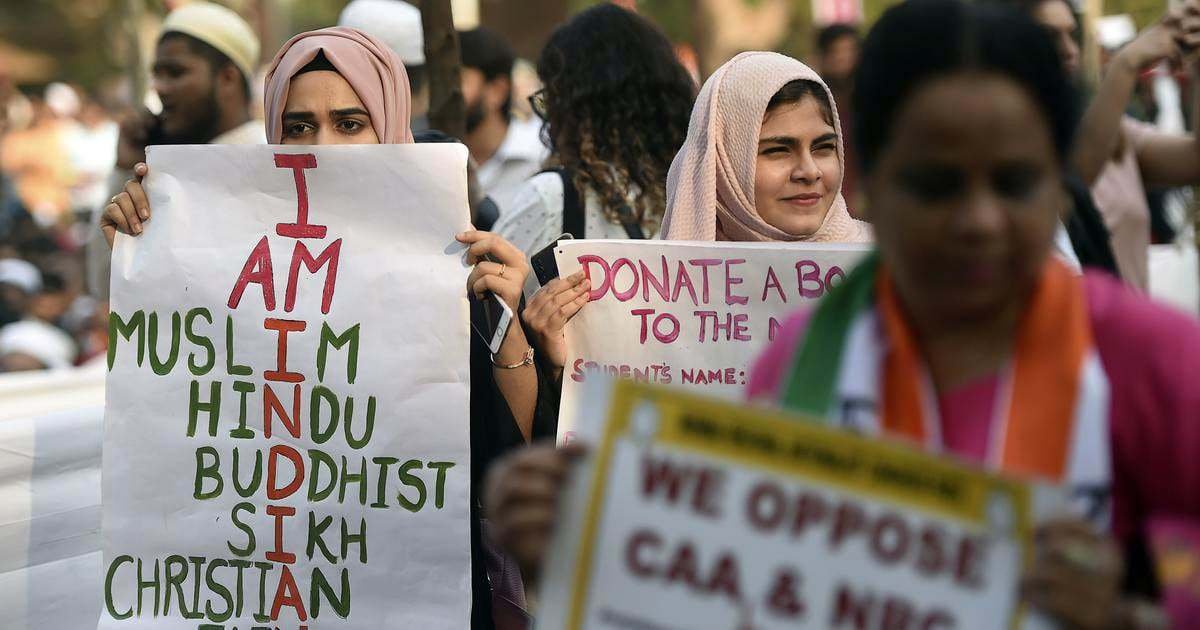
Muslism in Assam spends hours to motivate their fellows to go and use their right to vote. Why in a state that screams for secularism has been facing such issues? An example of a former teacher Islam Uddin has been a point of highlight where he was encouraging his fellows to go for voting. However, during this election phase he senses that something is different. Even if he manages to mobilize his fellow town individuals to visit the polling booths, he is doubtful whether their votes will have as much impact as before.
Their concern operates from a 2023 delimitation of the Election Commission of India that redrew the boundaries of the state’s assembly constituencies. The voter composition in Katigorah has changed hugely. The fact was that this constituency had Hindus and Muslims equally to cast votes, however more than tens of thousands of Hindus from adjacent areas were brought to change this into a Hindu majority constituency. This will result in less chances of Muslim candidate to attain success.
The Communal Herrymandering
What is happening in one constituency is happening in many others, too. Similar kinds of boundary changes in the 126 Assam assembly constituencies have also changed the electoral demography. The opponents of the boundary changes say that they will adversely affect the political representation of Muslims in the state where they constitute more than a third of the population. Political observers have called the procedure a form of “communal gerrymandering.” They cite through the tactics of splitting Muslim voters getting several constituencies to lessen their voting power (“cracking”), concentrating them in fewer constituencies (“packing”), and joining Hindu-majority areas to get a greater electoral advantage (“stacking”).
Consequently, constituencies where Muslims formed a majority have reportedly decreased from about 35 to nearly 20. Opposition party leaders and local analysts say these alterations were intentionally planned. They argue that Muslim-majority areas were broken up, whereas Hindu-majority areas were made stronger through strategic combinations. In certain instances, the natural logic of the geography – such as rivers – was ignored when redrawing the boundaries. Examples of this can be easily seen in the Barak Valley region. To gain a deeper understanding of these changes, many residents follow a northeast news portal for comprehensive regional breakdowns.
The Story of Naoboicha
Naoboicha, a constituency that had elected Muslim candidates several times, has had its Muslim-majority areas cut up and merged into the nearby constituencies. Actually, this constituency is now reserved for a Hindu scheduled caste candidate, which intelligence indicates will lead to less Muslim representation. Local politicians are crying out that these changes have greatly marginalized the community in the democratic process. A few even go as far as to believe that the alterations are so drastic that they make it almost impossible for Muslim candidates to win in multiple constituencies.
Certain political leader’s statements have only sparked these worries. Comments implying that constituency borders have been changed in order to stop Muslim candidates from winning have caused quite a stir and have been interpreted as supporting the idea of intentional marginalization. The ruling party is vehemently denying these charges. They maintain that the Election Commission conducted the delimitation process independently and that nothing was factored in based on the religion of the people.
See also: 3 Lifestyle Benefits of Moving Into a Community Environment
The real Political Picture in Assam
To date, politicians have not gone into detail regarding their rebuttals to the specific allegations of boundary manipulation. Moreover, this aspect is part of the grander political picture in Assam. For a long time, political discussions about identity and migration especially of Bengali people were the main themes. Nonetheless, there is a school of thought that religion is now a more significant dividing line with the authorities and the public discourse focusing more on and often targeting the Muslim communities.
This particular impact touches many residents on a very personal level. For instance, people like Uddin who are voters have a perception that even though they still have the right to vote, their power to sway the results has been significantly weakened. Some even liken this state of affairs to a political muting where you are physically there in the system but conceptually no longer have a voice. As the state moves closer to the polls, checking the North East news live feed can provide real-time perspectives on how these shifting demographics are influencing voter sentiment. With Assam all set to hold its elections, these worries are still influencing the political environment and at the same time bringing up issues of justice, rightful representation, and the possible effects of changing electoral boundaries in the state over the long run.