Introduction: Understanding Fire Risk Before It Becomes a Disaster
Fire emergencies rarely happen without warning signs. In most cases, small risks build up over time due to poor planning, lack of awareness, or failure to monitor conditions. A well-planned Fire Risk Assessment helps identify these warning signs early and prevents them from turning into serious incidents.
Fire safety is not limited to high-risk industries. Offices, shops, schools, residential buildings, and public spaces all face fire hazards that must be identified and controlled. This article explains how fire risk assessment works as a practical and effective blueprint for risk reduction.
The Purpose of Fire Risk Assessment
The main purpose of fire risk assessment is prevention and protection.
Key Goals
- Identify fire hazards
- Evaluate how likely a fire is to occur
- Assess potential harm to people
- Implement safety controls
- Prepare for safe evacuation
Fire risk assessment turns uncertainty into clear, manageable actions.
See also: Residential Building Inspector: Why Professional Home Inspections Matter
Understanding Fire Risk in Simple Terms
Fire risk is a combination of two factors:
- Likelihood of a fire starting
- Severity of harm if a fire occurs
A fire risk assessment examines both factors to determine where attention and resources should be focused.
Identifying Fire Hazards in All Areas
Fire hazards can exist anywhere within a building.
Common Hazard Areas
- Electrical rooms
- Storage areas
- Kitchens and canteens
- Server rooms
- Mechanical and plant rooms
Each area must be assessed separately to ensure accuracy.
Sources of Ignition and How to Control Them
Ignition sources are the starting point of most fires.
Typical Ignition Sources
- Faulty wiring
- Portable heaters
- Cooking equipment
- Hot work activities
Controls include maintenance programs, permits, and safe-use policies.
Managing Combustible Materials
Reducing fuel limits fire growth.
Fuel Control Measures
- Safe storage of flammable liquids
- Regular waste disposal
- Fire-resistant furniture and fittings
- Limiting combustible stock
Good housekeeping significantly reduces fire risk.
Oxygen Control and Fire Spread
Oxygen supports fire development.
Assessment Focus
- Ventilation systems
- Open doors and stairwells
- Airflow pathways
Fire risk assessment ensures oxygen flow does not accelerate fire spread.
Fire Detection and Early Warning Systems
Early warning saves lives.
Key Detection Elements
- Smoke and heat detectors
- Manual call points
- Audible and visual alarms
Systems must be suitable for the environment and tested regularly.
Firefighting Equipment and Accessibility
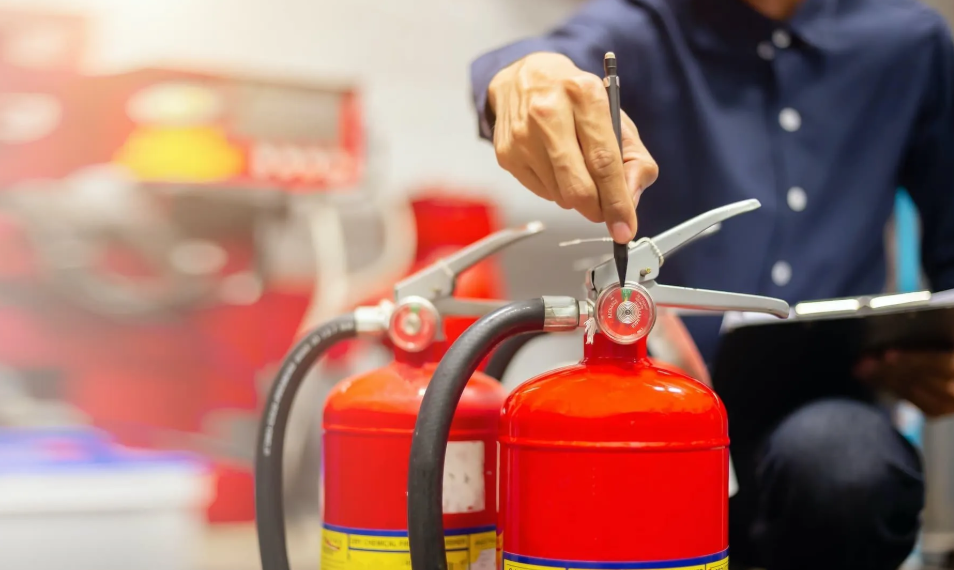
Firefighting equipment supports early control.
Assessment Considerations
- Correct extinguisher types
- Proper placement
- Clear signage
- Staff training
Equipment should never block escape routes.
Means of Escape and Emergency Lighting
Safe escape routes are critical.
Key Escape Features
- Adequate exit numbers
- Clear signage
- Emergency lighting
- Obstruction-free routes
Fire risk assessment ensures evacuation routes are practical under emergency conditions.
Evacuation Planning and Assembly Points
Evacuation plans must be realistic.
Effective Planning Includes
- Clear instructions
- Designated assembly points
- Accountability procedures
- Fire warden coordination
Practice drills help identify weaknesses.
Protecting Vulnerable Occupants
Some people need extra support.
Vulnerable Groups
- Disabled individuals
- Elderly occupants
- Pregnant workers
- Visitors unfamiliar with the building
Personal evacuation planning improves safety outcomes.
Training, Awareness, and Communication
People must understand fire risks.
Training Should Cover
- Fire prevention behavior
- Alarm response actions
- Evacuation procedures
- Reporting hazards
Regular communication reinforces safe behavior.
Reviewing and Updating Fire Risk Assessment
Fire risk changes over time.
When to Review
- After renovations
- When activities change
- After incidents or near misses
- When new equipment is introduced
Regular reviews keep safety measures effective.
Common Fire Risk Assessment Mistakes
Avoiding mistakes improves reliability.
Typical Errors
- Using generic templates
- Ignoring real behavior
- Failing to update assessments
- Poor staff engagement
Fire risk assessment must reflect reality, not assumptions.
FAQs About Fire Risk Assessment
1. How long does a fire risk assessment remain valid?
Until significant changes occur or a review is required.
2. Is fire risk assessment necessary for small premises?
Yes, size does not remove fire risk.
3. Can fire risk assessment reduce fire incidents?
Yes, by identifying hazards early.
4. Are contractors included in the assessment?
Yes, anyone on-site must be considered.
5. Does fire risk assessment include training needs?
Yes, training is a key control measure.
6. What happens if fire risks are ignored?
Increased chance of injury, damage, and legal action.
Conclusion
A well-executed Fire Risk Assessment provides a clear and practical blueprint for fire safety. By identifying hazards, managing risks, and preparing people for emergencies, organizations can significantly reduce the likelihood and impact of fire incidents.
Fire safety is an ongoing process that requires attention, awareness, and commitment—and fire risk assessment is the foundation that supports it.