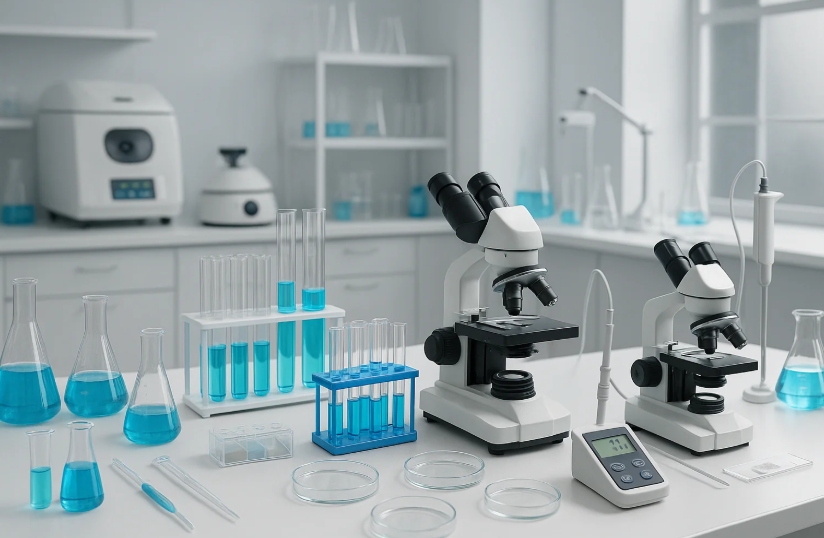
You need reliable lab supplies equipment to run accurate experiments, meet safety standards, and keep projects on schedule. Focus on quality, compatibility, and proper maintenance to get consistent results and extend the life of your instruments.
This article guides you through must-have consumables and core instruments, how to choose the right products for your workflow, and simple maintenance steps that prevent costly downtime. Expect practical tips on sourcing, comparing suppliers, and keeping your lab equipment calibrated and ready.
Essential Lab Supplies and Equipment
Focus on accuracy, contamination control, and user safety. Choose items that match the scale and procedures of your work, from precise measuring tools to reliable protective gear.
Laboratory Glassware
Use glassware when chemical resistance and thermal stability matter. Common items include beakers, Erlenmeyer flasks, volumetric flasks, graduated cylinders, and round-bottom flasks. Volumetric glassware (volumetric flasks and pipettes) gives the highest accuracy for preparing standards and dilutions; calibrate and handle them by the neck to avoid affecting volumes.
Borosilicate glass reduces breakage from heat and sudden temperature changes; inspect for chips or hairline cracks before use. Choose boiling flasks and condensers for reflux and distillation setups, and use filter flasks with proper vacuum-rated tubing for suction filtration.
Label glassware clearly with solvent-resistant markers or etched labels. When you need repeatable optical clarity or long-term chemical stability, prefer glass over plastic.
Laboratory Plasticware
Plasticware offers durability, lower cost, and reduced breakage risk. Use polypropylene or polyethylene tubes and bottles for aqueous storage and disposal; they resist many acids and bases but can swell in organic solvents. Polycarbonate and polystyrene provide optical clarity for cell culture and plate reading, but check for solvent sensitivity and autoclave limits.
For sample handling, select low-retention microcentrifuge tubes and certified nuclease-free consumables when working with DNA/RNA. Use sterile, single-use pipette tips with aerosol barriers for contamination control. For long-term reagent storage, choose cryo-rated vials and clearly mark storage temperatures.
Match plastic selection to chemical compatibility, required sterilization method, and required mechanical strength to avoid sample loss or contamination.
Measuring Instruments
Accuracy and calibration matter most for measuring instruments. Keep a digital analytical balance for sub-milligram mass needs and a top-loading balance for routine weighing. Calibrate balances regularly with traceable weights and perform routine checks with known standards.
Use micropipettes with appropriate volume ranges (e.g., 0.5–10 µL, 10–100 µL, 100–1000 µL) and calibrate them monthly or after heavy use. Maintain pipettes per manufacturer guidelines and use tip boxes with rack stability to avoid volume errors.
For temperature and pH control, use thermometers or digital probes with calibration certificates and pH meters with fresh buffers at pH 4, 7, and 10. Record calibration dates and retain logs for audits and reproducibility.
Safety Equipment
Prioritize personal protective equipment and engineered controls. Stock chemical-resistant gloves (nitrile for general use; neoprene or butyl for specific solvents), safety goggles or face shields, and lab coats sized to fit and resist contamination. Replace disposable PPE according to contamination events or wear.
Install and maintain biological safety cabinets, chemical fume hoods, and local exhaust systems for hazardous vapors, aerosols, or biological work. Ensure eyewash stations and emergency showers are accessible within the recommended distance and test them regularly.
Keep Class ABC or specialized extinguishers, spill kits for acids/bases and solvents, and clearly labeled first-aid kits. Provide training on PPE use, spill response, and emergency shutdown procedures so you and your team respond correctly under pressure.
See also: 5 Proven Techniques for Advancing Skiing Skills on Any Slope
Selecting and Maintaining Laboratory Equipment
You will prioritize performance, safety, and lifecycle cost when selecting supplies and instruments. You must also plan for routine care, storage, and scheduled calibration to preserve accuracy and avoid downtime.
Criteria for Choosing Lab Supplies
Choose instruments that meet the specifications your methods require: detection limits, precision, throughput, and compatible sample types. Verify vendor documentation for performance characteristics, materials of construction, and regulatory certifications (e.g., CE, ISO 17025) when applicable.
Assess total cost of ownership: initial price, consumables, maintenance contracts, spare-part availability, and expected service intervals. Factor bench space, power and utility needs, and integration with existing lab information systems.
Evaluate supplier support: on-site service response time, calibration options, training availability, and warranty terms. Prioritize modular designs that allow part replacement without full-unit downtime.
Proper Care and Storage
Store reagents and temperature-sensitive instruments per manufacturer instructions to maintain function and safety. Use labeled, dated storage with temperature logs for refrigerators and freezers; keep volatile solvents in ventilated cabinets rated for flammables.
Implement user-level cleaning and decontamination procedures after each use. Keep a simple checklist at each workbench for routine tasks (wipe down surfaces, inspect seals, remove residue). Use protective covers for optics and desiccants for moisture-sensitive tools.
Maintain an inventory system that tracks lot numbers, expiration dates, and calibration status. Train staff on correct handling, transport, and PPE specific to each instrument to reduce accidental damage.
Regular Calibration and Inspection
Establish a calibration schedule based on manufacturer recommendations, regulatory requirements, and instrument drift history. Use traceable standards and document every calibration event with date, technician, result, and any adjustment made.
Perform daily or pre-shift functional checks for critical instruments (balances, pipettes, centrifuges). Keep simple pass/fail records at the bench to catch issues before they affect data. Use predictive maintenance indicators like unusual noise, temperature changes, or increased error rates.
Maintain a log for preventive maintenance tasks: filter changes, lubrication, battery replacements, and firmware updates. Contract qualified service providers for complex repairs and retain records of service visits to support audits and warranty claims.