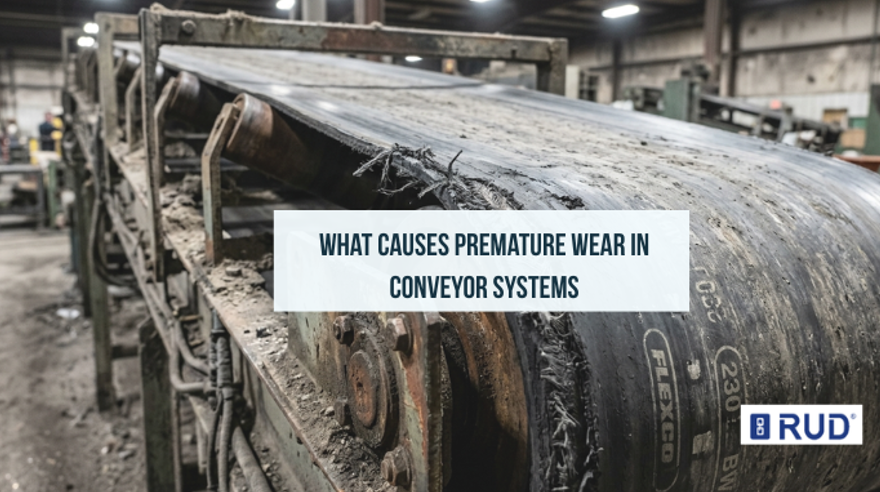
Premature conveyor wear is usually caused by poor lubrication, belt misalignment, overloading, and skipped maintenance checks. Across Australian sites, these issues accelerate wear on belts and rollers, which causes the material handling system to break down earlier than expected.
Unfortunately, fixing a damaged belt system is usually more expensive than addressing the initial warning signs. At RUD Engineering, we’ve seen that catching material fatigue early requires careful monitoring to identify where deterioration begins and how it spreads.
This article covers:
- The common causes of premature conveyor wear
- What poor servicing habits do to your equipment
- How proactive checks protect both your machinery and your crew
Read on to find out where your system might be vulnerable.
The Most Common Problems That Wear Conveyor Systems Down Early
Most material handling systems wear out early due to ignored friction points, misaligned belts, and debris buildup around moving parts. These act as starting points for damage, gradually spreading degradation to the rest of the system if you don’t check them.
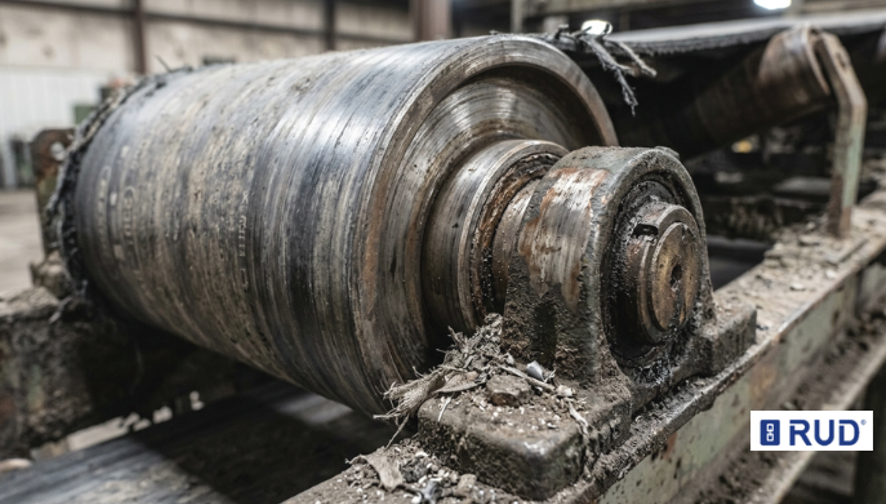
The following two areas tend to fail first on Australian sites.
Moving Parts That Take the Most Punishment
Rollers, pulleys, and bearings cop the worst of the movement-related harm. They run constantly under heavy load, and friction builds up quickly when you don’t look after them (even a thin film of grease can cause material fatigue).
Inadequate lubrication is one of the major culprits here. Without it, metal grinds against metal on every rotation, and the deterioration is gradual enough that many operators don’t notice until a component seizes. Our team has seen this pattern repeat across facilities where the operators slip lubrication schedules during busy periods.
Debris is the other problem. Dust, off-cuts, and material spillage stored around rotating elements create uneven pressure points. Over time, those pressure points chew through bearings and rollers well ahead of their expected service life.
How Conveyor Belt Tension and Misalignment Speed Up Damage
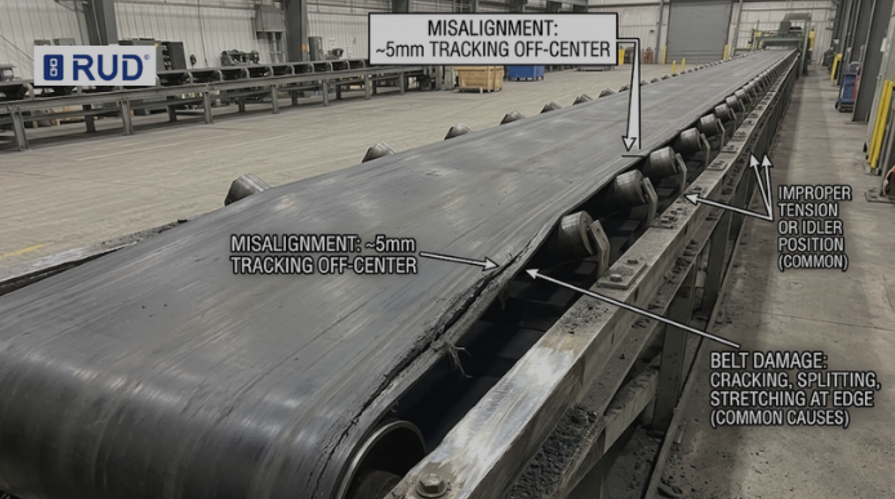
Belt tension and misalignment are two of the quickest ways to shorten a conveyor’s working life. In practice, incorrect tension causes the rubber to stretch and crack along the edges when set too tightly, or slip and wear unevenly when set too loosely.
Misalignment further compounds the problem (even a few millimetres off-centre can cause issues). When a belt tracks unevenly, it rubs against the frame on one side, which damages both the belt edge and the steel structure beneath it.
Once you leave these issues unaddressed, it’ll escalate into a serious tracking problem. So what could have been fixed with a simple belt realignment often becomes a full structural repair, with high replacement costs.
Materials Handling Solutions and How Poor Practices Make Things Worse
Frankly, the loading dock is where most conveyor deterioration begins. Rough handling, unevenly stacked pallets, and off-centre loading put hidden stress on belts and rollers, which often only becomes visible when a failure occurs.
Here are three common problems with materials handling that speed up degradation across Australian sites:
- Overloading Beyond Rated Capacity: Belt systems are designed with specific load ratings for a reason. So exceeding those limits puts extra strain on the belt, rollers, and drive components simultaneously. This stress quickly reduces operational efficiency and often leads to costly breakdowns.
- Incorrect Loading Angles: When materials hit the belt at the wrong angle, spillage increases and belt tracking shifts. Industries handling bulk materials (like aggregates or recycled scrap) see this problem drive up maintenance frequency faster than almost any other factor.
- Wrong System for the Load Type: Not every conveyor suits every material. Running abrasive or sharp-edged materials through equipment not rated for them quickly wears through the belt surface and internal parts. That’s why you should choose the right materials-handling solutions from the start to prevent expensive downtime.
Bottom Line: Across all three situations, the damage builds gradually. But the repair bills arrive all at once.
For facilities running chain-driven systems, specialists like RUD Australia design and manufacture trough chain conveyors, screw conveyors, and drag chain conveyors. Our belt system components work across horizontal, vertical, and inclined applications.
Proper Maintenance Checks That Most Sites Skip
A solid conveyor inspection routine catches small problems long before they shut down the production chain. And for most Australian industrial sites, the gap between a minor fix and a full replacement is simply a missed assessment.
The following two areas cover where proper maintenance pays off most on Australian industrial sites.
Maintenance Services Worth Scheduling Before Problems Show Up
Regular reviews keep belt systems running smoothly and prevent recurring failures. Sometimes, catching a minor conveyor issue early costs a fraction of what a full breakdown does in servicing fees and lost production.
Generally, lubrication, belt-tracking checks, and tension adjustments create the baseline of any reliable servicing routine. Our team has seen belts run for years longer simply because the operators checked tension on schedule. So skipping even one of these upkeep tasks regularly lets small issues grow into repairs that pull crews off other jobs.
Professional upkeep services also ensure that staff completes all checks, maintaining Australian safety and compliance requirements. For sites running conveyors across multiple shifts, proactive maintenance keeps the system at peak efficiency between scheduled shutdowns.
Pro Tip: Use automation tools like Fiix, UpKeep, and Maintenance Connection to schedule, track, and log key conveyor upkeep tasks. They reduce manual effort and keep setups running efficiently.
Workplace Safety Risks Linked to Worn Conveyor Components
Worn components can cause unexpected failures, endangering workplace safety and creating costly downtime.
For example, a frayed belt near an active work zone can sometimes stop an entire shift due to serious entanglement safety hazards for employees working alongside conveyor setups. And accidents from such failures often result in severe injuries.
What’s more? Sites that delay repairs often face compliance issues under Australian workplace health and safety regulations. So regular inspections keep workers and equipment safe and prevent costly repairs or compliance issues.
Costly Downtime and What It Actually Does to Productivity
Every unplanned conveyor stoppage costs Australian facilities thousands of dollars, slows production, and delays deliveries. It also disrupts schedules and creates pressure on other parts of the operation.
A breakdown of what unplanned stoppages typically cost across Australian industries:
| Industry | Average Hourly Downtime Cost | Primary Cause |
| Mining Operations | $10,000 + per hour | Belt failure, seized rollers |
| Manufacturing | $5,000 + per hour | Misalignment, worn bearings |
| Construction | $2,500 + per hour | Debris buildup, lubrication failure |
| Waste and Recycling | $1,500 + per hour | Overloading, belt wear |
Repeated stoppages not only increase operational costs but also add extra labour and replacement expenses.Idle conveyor systems take up floor space, disrupt downstream workflows, and delay delivery schedules, directly affecting customers.
Typically, the first sign of a productivity problem is an overdue maintenance log. Facilities that address conveyor degradation early reduce financial losses by keeping production running between scheduled shutdowns.
That said, inspection gaps, rather than equipment age, almost always cause expensive repairs, including steel cord replacements.
Your Conveyor System Deserves Better Than Reactive Repairs
Premature wear in conveyor systems rarely happens overnight. It builds through skipped inspections, wrong loading practices, and components running longer than they should without proper servicing. By the time a breakdown hits, the damage is already weeks or months old.
The good news is that most of these issues are preventable. Regular maintenance checks, correct belt tension, and the right materials-handling setup go a long way in keeping equipment running reliably across shifts.
If your conveyor setup is due for a review, RUD Engineering can help. We work with Australian industrial teams across Brisbane and Ipswich to supply, engineer, and service conveyor systems for the demands of local operations.