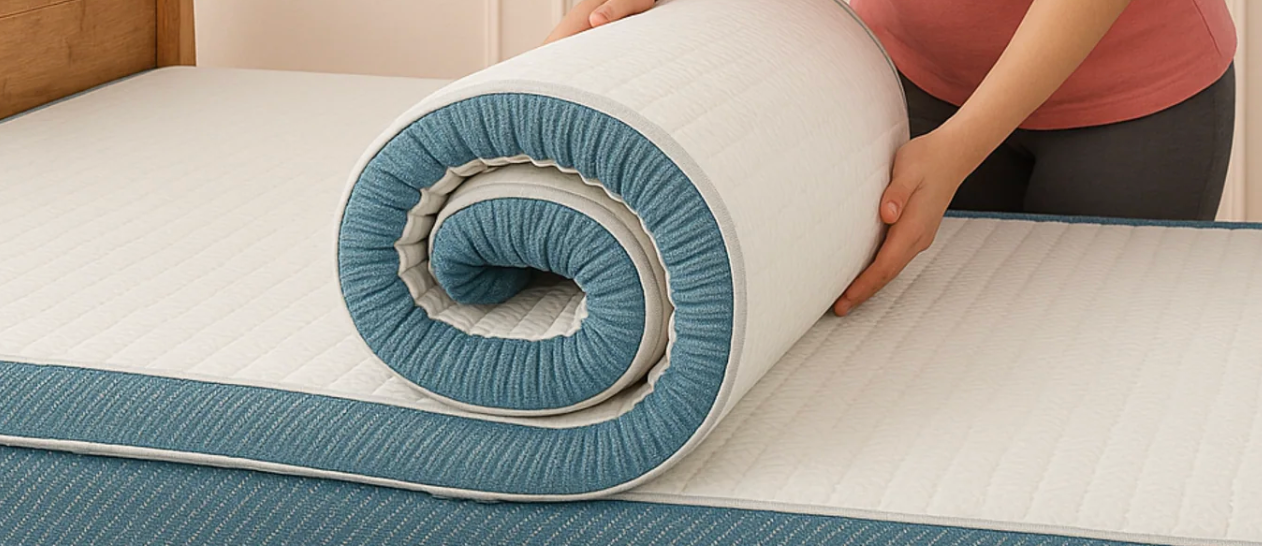
A mattress topper is often chosen to make an existing bed feel softer or more comfortable, but the way a topper is constructed can be just as important as the material itself. One approach is zoned construction, where different areas of the topper are designed to respond differently to different parts of the body.
The idea is fairly straightforward. Body weight is not spread evenly from head to toe when a person lies down. Areas such as the shoulders and midsection can place different levels of pressure on the sleep surface compared with the head, legs and feet. A zoned mattress topper is designed with these differences in mind, creating sections that provide varying levels of cushioning or support. Understanding how zoning works can make it easier to decide whether this type of topper suits an individual’s comfort preferences.
Why Body Weight Is Not Evenly Distributed During Sleep
When someone lies on a mattress, different parts of the body make contact with the surface in different ways. The shoulders, torso, hips and legs differ in both shape and weight, which means they do not place identical pressure on the bed.
Sleeping position changes this distribution further. A side sleeper, for example, makes more concentrated contact through certain areas than someone lying on their back. Body shape and weight can also affect how deeply individual areas settle into the sleep surface.
A completely uniform topper provides the same basic construction from one end to the other. Zoned designs take a different approach by dividing the sleeping surface into sections intended to respond to different areas of the body.
What Does Zoned Construction Mean?
A zoned topper divides its surface into distinct areas rather than using exactly the same structure throughout.
Depending on the design, those areas can have different firmness levels, patterns or surface structures. The purpose is to provide differentiated support instead of treating the entire body in exactly the same way.
Topper range includes a memory foam design constructed with three body zones using different firmness levels for the upper, middle and lower body. It also includes a soft foam design divided into five zones intended to distribute weight across the head, shoulders, lumbar area, legs and feet.
The number of zones can therefore vary according to how the topper has been designed.
How Three-Zone Mattress Toppers Work
A three-zone design takes a relatively broad approach to body support.
Instead of dividing the topper into many small sections, the sleeping surface can be organised around the upper, middle and lower portions of the body. Each area may provide a slightly different response according to the firmness and construction used.
The three-zone memory foam topper uses different firmness levels across these areas. Its design is intended to provide targeted support while cushioning areas such as the neck, shoulders and back.
This demonstrates how zoning can be incorporated into the foam itself rather than requiring separate layers or removable sections.
How Five-Zone Designs Differ
Five-zone construction divides the sleeping surface into more individual sections.
The soft foam topper uses five zones corresponding to the head, shoulders, lumbar area, legs and feet. The purpose of this construction is to distribute body weight across the sleep surface while providing support for different areas.
More zones do not automatically make a topper better. They simply represent a different approach to designing the sleeping surface.
Comfort remains personal, so the number of zones should be considered alongside material, firmness, thickness and the condition of the underlying mattress.
Zoned Construction Can Help Spread Pressure
When weight becomes concentrated over a relatively small contact area, that part of the sleep surface experiences greater pressure.
A zoned design can help manage this by allowing different areas of the topper to respond according to their construction. Rather than creating identical resistance everywhere, the surface can provide varying levels of cushioning and support.
This is one reason zoning is often discussed together with pressure distribution.
The goal should not be interpreted as eliminating pressure entirely. Every sleep surface carries body weight. Instead, the design aims to create a more balanced interaction between the body and topper.
Material Changes How the Zones Feel
Zoning is only one part of a Mattress Topper. The material used to create it has a major influence on the overall feel.
Memory foam tends to contour around the body as pressure is applied. The gel memory foam design combines this contouring behaviour with three body zones.
Other foam constructions can feel softer or respond differently. Latex, for example, has a more responsive and bouncy character. The latex topper uses an egg-crate structure that is intended to help distribute body weight rather than the same three-zone construction used in the memory foam option.
Buyers should therefore consider both material and construction instead of looking at zoning alone.
Zoned and Contoured Designs Are Not Exactly the Same
It is also useful to distinguish between explicitly zoned construction and other methods of shaping a topper.
A zoned topper divides the sleep surface according to different areas of the body. Other designs may use patterns, cuts or structures across the foam to influence cushioning, airflow or weight distribution.
The latex topper provides a good example. It uses an egg-crate structure designed to distribute body weight and Pincore holes intended to promote air circulation and reduce heat trapping.
Different construction methods can therefore pursue similar comfort objectives without using exactly the same zoning system.
Topper Thickness Also Influences Comfort
The number of zones is not the only specification worth considering. Thickness can noticeably influence how much a topper changes the feel of an existing mattress.
A thicker topper generally creates a more substantial additional layer between the sleeper and mattress, while a thinner option changes the surface less dramatically.
However, thicker does not automatically mean more comfortable. The ideal choice depends on the material, firmness, existing mattress and individual preference.
The Mattress Underneath Still Matters
A topper works together with the mattress below it. It does not function as a completely independent sleep system.
If the existing mattress provides a reasonably stable base but feels firmer or less comfortable than preferred, adding a topper can modify the surface feel. Zoned construction can then introduce additional cushioning and differentiated support.
However, a topper should not automatically be expected to correct major structural problems with an old or damaged mattress.
The condition of the existing bed should therefore be considered before deciding whether adding a topper is the appropriate solution.
Sleeping Position Can Influence Personal Preference
Different sleeping positions create different patterns of contact with the mattress.
Side sleepers generally place noticeable pressure through areas such as the shoulders and hips. Back sleepers distribute contact differently, while people who change positions frequently may prefer a surface that responds comfortably across several sleeping postures.
This does not mean there is one specific zone configuration that every person in a particular sleeping position should choose.
Instead, sleeping position can be considered alongside body weight, preferred firmness, material and existing mattress feel when evaluating a topper.
Weight Distribution Should Not Be Confused With Medical Treatment
Terms such as body support, pressure relief and spinal alignment are frequently used when discussing mattresses and toppers. However, comfort products should not be treated as substitutes for medical assessment or treatment.
A zoned topper can be designed to distribute weight and provide differentiated cushioning across the sleeping surface. Whether a particular construction feels comfortable depends on the individual.
People experiencing persistent back, neck or other musculoskeletal problems should seek appropriate professional advice rather than relying on a topper as a treatment.
For general buyers, it is more useful to evaluate zoning in terms of comfort, cushioning and sleep-surface support.
See also: Using AI to Simplify Business Management
Breathability Can Be Considered Alongside Zoning
Comfort is not determined by pressure distribution alone. Temperature and airflow can also influence how a topper feels during the night.
Different materials and constructions address this in different ways. The soft foam design combines five-zone construction with Pincore technology intended to improve air circulation and reduce heat trapping. The latex option also incorporates Pincore holes.
Memory foam designs can use other approaches, including gel-based constructions.
Someone comparing toppers should therefore look at the complete design rather than choosing solely according to the number of body zones.
Keeping the Topper in Position Is Also Important
A carefully designed surface cannot perform as intended if the topper constantly moves out of position.
This is particularly relevant with zoning because the different sections are intended to correspond broadly with different parts of the body. Proper sizing and secure placement therefore matter.
The topper designs use features such as anti-skid bottoms and elastic bands to help keep the topper positioned on the mattress.
Choosing the correct topper size for the mattress is equally important. A topper that is too large or too small may not sit properly on the existing sleep surface.
More Zones Do Not Automatically Mean Better Comfort
It is easy to assume that five zones must be better than three because the number is higher. In practice, topper selection is more nuanced.
Three-zone and five-zone designs simply divide the body differently. Material, firmness, foam response, thickness and personal sleeping preferences can have just as much influence on comfort.
Someone who prefers the contouring sensation of memory foam may favour a three-zone memory foam construction, while another person may prefer the feel of a softer foam or responsive latex design.
The better choice is the one whose complete construction matches the sleeper’s preferences.
How to Choose a Zoned Mattress Topper
Start by considering what needs to change about the existing mattress. Some people want additional softness, while others are primarily interested in more cushioning or a different surface response.
Next, compare the topper materials and construction. Look at how the zones are arranged, what material is used, the available thicknesses and whether features such as breathability, motion isolation or secure fitting matter for the intended use.
Finally, check the dimensions carefully.
A Mattress Topper should be selected as a complete sleep-surface product rather than according to a single specification such as the number of zones.
Conclusion
Zoned mattress toppers are designed around the fact that body weight is not distributed identically from head to toe. By dividing the sleeping surface into different sections, manufacturers can vary the way particular areas cushion and support different parts of the body.
Three-zone designs can broadly address the upper, middle and lower body, while five-zone constructions can divide the surface further around areas such as the head, shoulders, lumbar region, legs and feet. Other constructions, including contoured latex designs, can also help distribute weight without using the same zoning arrangement.
When choosing a Mattress Topper, zoning should therefore be considered alongside material, thickness, breathability, mattress condition and personal comfort preferences. The number of zones alone does not determine whether a topper will feel right.