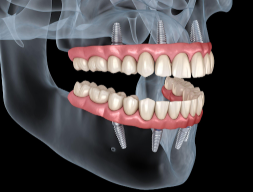
You may be at the point where eating is harder than it should be, your bite feels off, or you are tired of looking at teeth that no longer feel like yours. If you are exploring Dentures in Vanier, Ottawa, full arch replacement can sound like the finish line, but most people feel a mix of hope and dread before they start. That makes sense. This is a big decision, it costs real money, and once teeth are removed or a final prosthesis is made, changes get harder.
That is why a diagnostic tooth setup matters before treatment moves forward. It gives you and your denture and implant dentist a way to test the plan before the final version is built. You get to see tooth position, bite, smile line, speech, and facial support in a form that can still be adjusted. In plain terms, it helps catch problems early, when fixing them is simpler, less expensive, and far less frustrating.
A diagnostic tooth setup turns a guess into a treatment plan
When people hear “full arch replacement,” they often picture implants, healing, and a finished set of teeth. What they do not always see is the planning work that decides whether those teeth will actually feel right in daily life. A diagnostic tooth setup before full arch replacement is a preview of the proposed result. It helps guide esthetics, function, and the space needed for the final restoration.
If the setup is skipped, the risks are not abstract. Teeth can end up too long, too short, too far forward, or too far back. Your lips may not be supported well. Speech can change. The bite can feel strained. You might still have a beautiful set of teeth on paper and yet hate how they feel at dinner, in photos, or during a conversation.
Research in prosthodontic planning keeps pointing back to the same idea. Careful preoperative evaluation improves predictability. A review on full arch implant rehabilitation discusses how prosthetic planning drives surgical choices, not the other way around. You can read that in this overview of full arch implant planning and workflow. Another paper shows how digital and conventional records help clinicians evaluate occlusion, esthetics, and restorative space before treatment becomes final, which is exactly where a setup earns its value. See this research on prosthetic planning and digital assessment. A broader review of complete arch rehabilitation also supports the need for detailed diagnosis and trial evaluation before definitive care. That is covered in this clinical review of full mouth and full arch rehabilitation.
Why full arch replacement needs a trial run before final teeth are made
People often assume the hard part is surgery. Surgery matters, but the final outcome depends just as much on where the teeth go and how they work together. A trial setup lets your dentist evaluate whether the proposed teeth support your face, meet your lower arch correctly, and give you room to speak without clicking, whistling, or straining.
Think about someone who has worn down teeth for years. Their bite may have collapsed slowly, so they adapted without noticing. If full arch treatment simply copies that worn pattern, the new teeth may look fresh but still carry old problems. A setup gives your dentist a chance to rebuild the bite with intention instead of repeating damage.
This also matters emotionally. You are not being difficult if you want to see the smile shape before committing. You are trying to avoid regret. That is reasonable. A tooth setup for full arch implants gives you something real to react to. You can say the front teeth feel too prominent, the smile looks too flat, or the bite feels crowded. Those details are hard to explain from scans alone and much easier to address in a trial phase.
The practical differences between planning with and without a diagnostic setup
| Planning Element | With Diagnostic Tooth Setup | Without Diagnostic Tooth Setup |
|---|---|---|
| Smile appearance | Tooth size, display, and midline can be reviewed before final fabrication | Esthetic issues may appear late, when changes are harder |
| Bite and function | Occlusion can be tested and adjusted in advance | Higher chance of pressure spots, uneven contacts, or awkward chewing |
| Speech | Sounds like “f,” “v,” “s,” and “th” can be checked during trial wear | Speech changes may not show up until after delivery |
| Facial support | Lip support and facial profile can be evaluated | Final teeth may feel bulky or leave the face looking sunken |
| Surgical guidance | Implant placement can be coordinated with the restorative goal | Surgery may limit ideal tooth position later |
| Cost control | Problems are found earlier, when revisions are usually simpler | Late changes can mean more appointments, remakes, and added cost |
Small planning errors become daily problems after full arch treatment
A millimeter can sound minor until it affects how your front teeth meet your lip or how your jaw closes all day long. Full arch cases magnify small errors because every tooth works as part of one system. If one part is off, the whole arch can feel wrong.
This is where full arch replacement planning stops being a technical detail and starts affecting your life. Meals take longer. Your jaw gets tired. You avoid smiling because the teeth do not look like you. None of that is dramatic. It is just exhausting, and people often blame themselves when the real issue was planning.
Three steps to take before you commit to final treatment
Ask to see the proposed tooth position before surgery or final fabrication. Whether the setup is digital, printed, or wax based, you want a clear preview. Ask how your smile line, bite, and facial support are being evaluated.
Test speech and comfort, not just appearance. Looking good in a still image is not enough. Read out loud. Count from fifty to sixty. Say words with “s” and “f” sounds. Ask whether the setup can be adjusted if speech feels off.
Make sure surgery follows the restorative plan. In strong cases, implant placement supports the planned teeth, not the reverse. Ask your provider how the setup guides implant position, angulation, and restorative space. That is a key part of good denture and implant dentist care.
A better final result starts before the final teeth
You do not need to rush into a permanent answer just because you are tired of the current problem. The planning stage is where many of the best outcomes are won. A diagnostic setup gives you a safer way to move forward, with fewer surprises and more control over how your new teeth will look, feel, and function.
If you are considering full arch treatment, ask for a clear planning process that includes a diagnostic tooth setup before anything final is made. That one step can save time, money, and regret, and it can help you walk into treatment feeling informed instead of cornered.