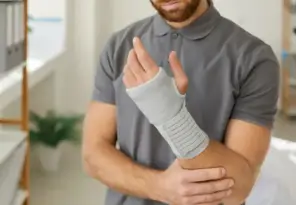
In the wrist, a complex network of ligaments keeps the eight small carpal bones in their actual proper places. When one of these tissues is stretched or torn, usually due to a fall on an outstretched hand or a sudden twisting force, the result is a ligament injury or sprain.
Unlike a muscle strain, which often heals quickly with rest, a ligament injury requires specific structural support to mend correctly. Selecting the appropriate gear is the first proactive step toward reclaiming your stability. This guide explores the tips of choosing a wrist brace and how to avoid common pitfalls during your recovery.
The Role of Bracing in Ligament Repair
When a ligament is compromised, the joint becomes very unstable. This instability creates a cycle of pain; every time you move your hand, the injured tissue is tugged, preventing the fibers from reknitting. The primary goal of a wrist brace is to act as an external ligament. By holding the bones in a fixed position, it allows the torn fibers to remain in close proximity, which is essential for the formation of healthy scar tissue.
Many people recovering from ligament injuries with wrist support find that the psychological benefit is just as important as the physical one. Knowing that your wrist is protected from accidental bumps or sudden movements allows you to move through your day with less anxiety. If you have seen a ligament injury wrist brace review insta post, you likely noticed that the most praised models are those that offer a balance of rigid support and all-day comfort.
How Tight Should a Wrist Brace Be for Ligament Support?
One of the most frequent points of confusion for those starting their recovery is the fit. How tight should a wrist brace be for ligament support? If the brace is too loose, the bones will still shift, and the ligament will continue to be irritated. If it is too tight, you risk compressing nerves or cutting off the blood supply that is vital for healing.
The ideal fit should feel like a firm, non-yielding pressure. You should not be able to wiggle your wrist up, down, or side to side. A reliable test is to ensure you can still wiggle your fingers freely and that your skin does not change color. If your fingers feel cold or you notice a pins and needles sensation, you must loosen the straps immediately. Adjusting wrist braces for comfort is a process of fine-tuning; you may find you need to tighten the brace during the day when you are active and loosen it slightly when you are resting.
In our digital world, the question of can I type or work while wearing a wrist brace is a top priority. For many, taking weeks off work is not an option. The good news is that most modern braces are designed with the working professional in mind. Using wrist brace during typing or sports is possible if you choose a low-profile design.
When typing, the goal of the brace is to prevent your wrist from dropping into a flexed position or cocking too far back. While your typing speed might decrease slightly due to the restriction, wearing the brace prevents the repetitive micro-trauma that can turn a simple sprain into a chronic issue. Many people share their success stories on social media, such as how I healed my wrist ligament with a brace tiktok videos, often highlighting that wearing the brace at their desk was the key to staying productive while healing.
Wrist Brace Mistakes for Ligament Healing
Even with the best intentions, it is easy to make wrist brace mistakes for ligament healing. One common error is removing the brace too early. Because ligaments have a poor blood supply compared to muscles, they heal much slower. You might feel pain-free after a week, but the tissue is still fragile. Removing the support prematurely can lead to a re-tear, setting your recovery back by months.
Another mistake is wearing a brace that is too short. For a ligament injury, the brace should extend at least halfway up your forearm. This length provides the necessary leverage to keep the wrist truly immobile. A short, wrap-around sleeve might feel good because of the compression, but it does not provide the structural stability required for a Grade 2 or Grade 3 ligament sprain.
See also: Why Early Specialist Care Can Make a Big Difference in ENT Health
Wearing Wrist Splints for Sprained Ligaments
When browsing for gear, you will encounter various levels of support. Wearing wrist splints for sprained ligaments usually falls into two categories:
- Rigid Splints: These feature a metal bar or stay. These are best for the first two to four weeks of a significant ligament tear. They ultimately offer the highest level of protection that you need.
- Semi-Rigid Braces: These might use plastic stays or heavy-duty fabric. These are excellent for the later stages of recovery or for using wrist brace during typing or sports once the initial healing has occurred.
People using wrist braces for ligament healing often start with a rigid model and transition to a semi-rigid one as their physical therapist begins to introduce strengthening exercises. This stepping-down approach ensures the joint is never left entirely vulnerable while it regains its natural strength.
Conclusion
A ligament injury can be a long and frustrating hurdle, but it is one that you can totally overcome with the right strategy. Choosing a brace that offers the correct level of rigidity, ensuring a snug but safe fit, and being consistent with nighttime use are the pillars of a successful recovery. Whether you are inspired by a ligament injury wrist brace review insta post or following the advice of a specialist, remember that your brace is a temporary tool that is totally designed to give your body the support it needs to heal.
Be patient with the process, avoid the common mistakes of premature removal, and you will soon find yourself moving with the strength and stability you had before the injury. Always make sure to just consult with a healthcare professional to determine the grade of your ligament tear and to receive a personalized rehabilitation plan.