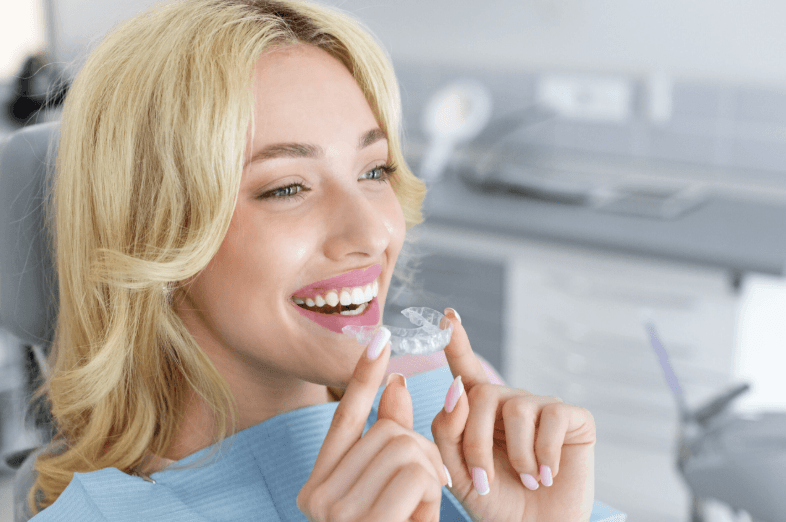
There’s a reason so many people ask about clear aligners first.
They’re discreet. Removable. Easier to fit into everyday life than traditional braces. For adults heading into meetings or teens thinking about school photos, that appeal makes sense.
But here’s the part that doesn’t always make it into the conversation: Invisalign isn’t automatically the best answer for every smile.
Sometimes it’s a great fit. Sometimes another route simply makes more sense.
Where Invisalign Tends to Work Really Well
Mild to moderate crowding? Small gaps? Minor bite adjustments?
That’s often where Invisalign treatment shines.
People who are disciplined about wearing aligners usually do very well too. Since aligners need to stay in around 20–22 hours each day, consistency matters more than many expect.
Adults often appreciate the flexibility. Meals are easier because aligners come out. Brushing and flossing stay fairly normal. There are no brackets catching spinach at lunch.
That convenience is one reason demand for Invisalign in Colorado keeps growing.
But convenience isn’t the whole story.
The Compliance Piece Nobody Talks About Enough
Clear aligners only work when they’re actually being worn.
Sounds obvious. But real life gets in the way.
Busy schedules. Sports practices. Coffee habits. Forgetting to put trays back in after dinner.
Teens and adults alike can struggle with wear time sometimes.
Braces remove that variable completely. They’re already doing the job whether someone remembers them or not.
That’s one reason conversations around Invisalign vs braces aren’t always about aesthetics. Sometimes they’re about lifestyle and predictability.
When Braces May Have the Advantage
There are situations where braces simply provide more control.
Severe crowding. Significant rotations. Bigger bite problems. Teeth that need complex directional movement.
These are often considered complex orthodontic cases.
In those situations, braces may allow orthodontists to apply force in very precise ways. That can make treatment more efficient or more predictable.
This doesn’t mean Invisalign can’t handle difficult cases. Modern aligner systems are more advanced than they used to be.
But there are still moments when braces become the stronger clinical choice.
And yes there are times when braces are better than Invisalign.
Bite Problems Are More Complicated Than They Look
Some people come in thinking they just want straighter front teeth.
Then the evaluation shows something deeper happening with the bite.
Overbites. Crossbites. Jaw alignment issues. Uneven tooth contact.
That changes the conversation.
Bite correction treatment often involves more than cosmetic alignment. The focus shifts toward function how teeth fit together during chewing, speaking, and everyday wear.
Some bite issues respond well to aligners. Others may benefit from braces or hybrid approaches.
The right answer depends on the mechanics involved.
Customized Treatment Matters More Than the Appliance
One thing worth remembering: successful orthodontics isn’t about choosing a product.
It’s about choosing the right plan.
That’s where customized orthodontic treatment comes in.
Two people can have crooked teeth and need completely different approaches.
One person may thrive with aligners. Another might get a faster, more stable outcome with braces. A third could use a combination of methods.
That’s normal.
Treatment planning isn’t one-size-fits-all, even when online ads make it sound that way.
See also: How to Choose the Right Health Insurance Plan in the Digital Age
The “Best” Option Depends on the Person
There isn’t a universal winner in the Invisalign vs braces debate.
A college student managing mild spacing may love aligners. A younger teen with compliance challenges might do better with braces. Someone dealing with major bite correction may need a more structured system altogether.
The decision usually becomes clearer after a detailed evaluation.
Not because one treatment is superior across the board.
Because orthodontics works best when it matches the person sitting in the chair.
Straight teeth are part of the goal. Healthy function matters too.
And sometimes the best treatment choice isn’t the one that looks most convenient at first glance. It’s the one that fits the biology, habits, and long-term outcome that the smile actually needs.