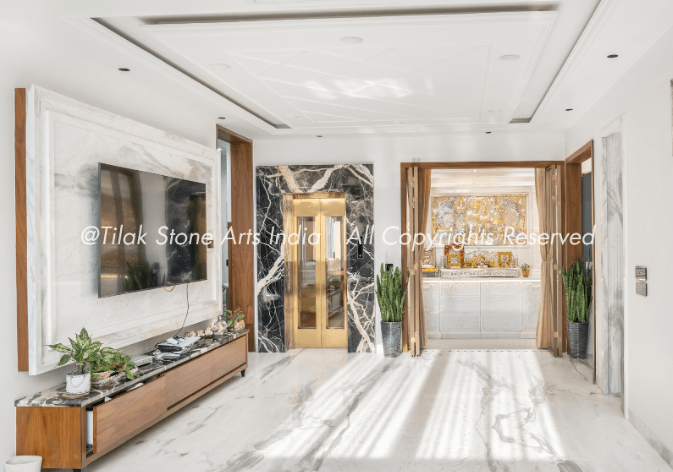
Most homeowners pour considerable thought into the structure of the temple itself, its carvings, its scale, its finish. What often goes unaddressed is the space surrounding it. The wall, the backdrop, the visual frame that holds the sacred structure in place. Get that detail wrong, and even the most exquisite temple can feel incomplete, or strangely underwhelming, within the prayer room.
There is a design principle that experienced specialists return to again and again: the backdrop defines the mood of a sacred space far more than most people expect. A thoughtfully executed pooja room background design shapes how the temple is perceived the moment someone walks through the door. It creates depth, frames the idol, and determines whether the space feels genuinely devotional or simply decorative. That distinction matters considerably.
Where Most Designs Go Wrong From the Start
The Ignored Wall: Many homeowners invest their entire budget and attention in the temple unit itself, only to find that the wall behind it has been treated as an afterthought. This creates a visual disconnect that lighting and accessorising cannot fully correct. The background is not a passive surface. It is an active part of the composition that either elevates or undermines everything placed in front of it.
The Extended Tile Mistake: A far too common approach is to simply extend the existing tile or paint colour from the surrounding room onto the temple wall. This removes the visual boundary that separates the sacred from the functional, which matters considerably in both aesthetic and spatial hierarchy terms. The temple deserves its own visual identity, and the background is precisely where that identity begins to take shape.
The Scale Miscalculation: Homeowners sometimes choose background materials or patterns that compete with the temple rather than complement it. Busy stone veining behind an intricately carved temple creates visual noise that dilutes the impact of both. The background should support the centrepiece, not fight for attention with it. Getting this balance right is what separates a well-designed pooja room from one that merely looks arranged.
What the Wall Is Actually Saying
Visual Hierarchy in Sacred Spaces: The wall behind a home temple carries significant visual weight. When it is left plain or underdesigned, the eye has nothing to anchor beside the temple itself, which can make even a finely carved structure appear smaller or less impactful than it truly is. A considered background adds dimension and draws the eye naturally towards the centrepiece without competing with it.
Spatial Intention and Energy: Vastu Shastra principles suggest that the atmosphere of a sacred space is shaped not just by the direction and placement of the temple, but by the surfaces that enclose it. A carved backdrop in natural stone creates a resonance that smooth, painted walls cannot replicate. It is a subtle difference, but one that those who spend meaningful time in the space tend to feel quite clearly.
Choosing Materials That Serve the Space
Marble as a Primary Surface: Vietnam White Marble, known across different grades as Swiss White, Super Fine White Vietnam, and Vietnam Marble, is among the most considered choices for a pooja room background. Its natural veining provides organic movement, its surface reflects light in a way that feels luminous rather than harsh, and its cool, clean tone creates an immediate sense of calm and reverence around the temple.
Carved Panels and Their Purpose: A carved marble panel positioned directly behind the temple introduces texture, craft, and spiritual symbolism simultaneously. The work of bas-relief carving, where motifs such as lotus forms, paisleys, or sacred geometric patterns are worked into the stone surface, transforms the background from a passive material into something that contributes meaningfully to the devotional atmosphere of the space.
Matching the Background to Your Space:
- Small pooja rooms: A single carved marble panel or a clean stone slab in a light variety keeps the space feeling open while still creating a clear visual boundary from the rest of the room.
- Medium-sized rooms: Full marble cladding on the temple wall, with a carved central section, creates depth and visual hierarchy without overwhelming the proportions of the space.
- Larger dedicated rooms: Layered designs using onyx stone or a combination of marble varieties and carved detailing can produce an immersive environment that feels genuinely temple-like in character.
- Modern interiors: Wonder White marble or Italian marble varieties used for the pooja room background offer a refined, contemporary finish that integrates well with cleaner architectural styles.
How Light and Colour Shape the Mood
The Stone-Light Relationship: The material and tone of the background determine how light behaves within the pooja room. White and off-white stone varieties reflect warm light beautifully, creating a soft glow that feels devotional rather than dramatic. Darker or more veined stone can absorb and distribute light differently, lending depth to larger rooms where contrast is welcome and intentional.
Temperature and Temple Style: Cool-toned backgrounds in Vietnam marble varieties tend to read as serene and uncluttered, while warmer stones carry a richness that suits more traditional or ornate temple styles. The right choice depends on the architecture of the room, the carving style of the temple, and the mood the homeowner is genuinely trying to create within the space.
Read also: How to Relocate in Australia’s Busiest City Without the Stress
Where a Sacred Space Truly Takes Shape
The background behind a home temple is not a finishing touch. It is a foundational decision that shapes how the temple reads visually and how the room feels during prayer. If you are planning or redesigning a pooja room, take the time to consult specialists who understand both the material properties and the design principles that make sacred spaces meaningful. The right background will reflect that care for years to come.